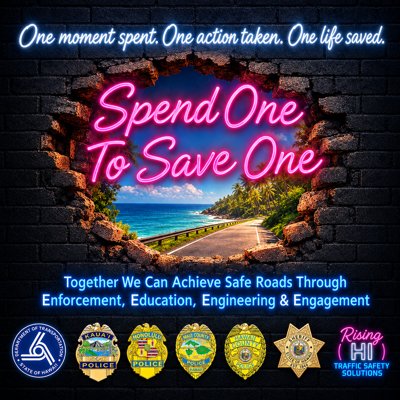
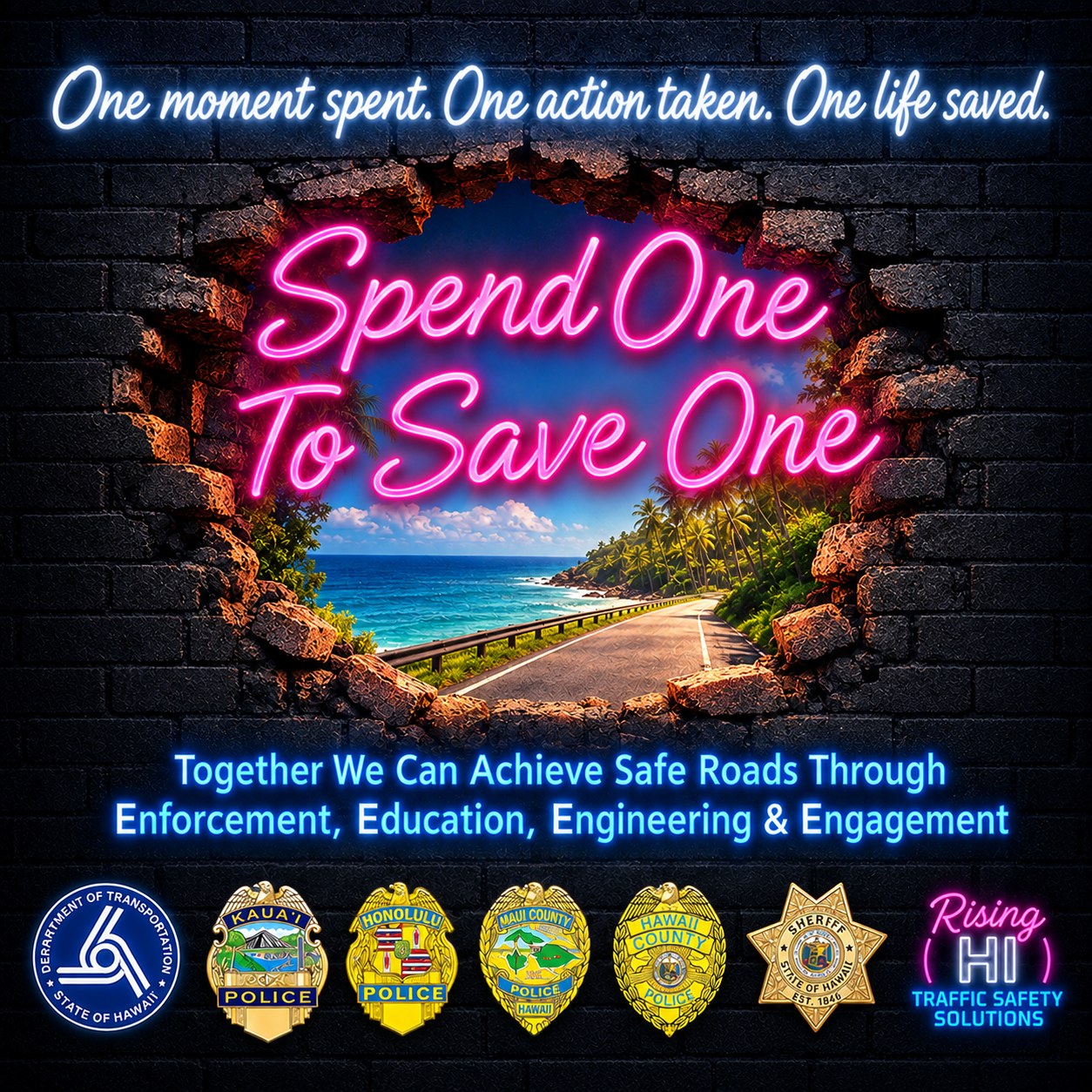
 Spend One to Save One
One moment spent. One action taken. One life saved.
If officers spend one focused hour on traffic safety, and every partner and community member invests a moment of their own time for the same cause, lives will be saved.
These crashes are not accidents. They are predictable and preventable.
In 2025, Hawaiʻi lost 128 people on its roads, the most since 2007 and 25% more than in 2024, while the nation saw an estimated 6.7% decline. More than 90% of those fatal crashes were tied to driver behavior.
Sources: HDOT and county police fatality data; Department of the Attorney General, Hawaiʻi Crime Dashboard. 2026 figures are preliminary. See the full data page.
Three commitments
The campaign asks for a small, specific investment from everyone who shares the road.
One Moment…
One hour per shift (or per week, as staffing allows) of proactive traffic enforcement, education, and engagement, aimed at the behaviors that kill and the places where crashes happen.
One Action…
At least one traffic safety action in your own field each month, plus one moment of engagement with fellow partners to share what you are seeing.
One Life Saved.
Take a minute before every trip to plan the route, silence your phone, buckle up, wear a helmet, drive defensively, and never drive impaired.
Data-driven, high-visibility enforcement of the behaviors that kill, focused on high-crash corridors. The certainty of being caught changes behavior more than severity.
Targeted, culturally tailored messaging paired with meaningful actions for drivers, riders, and walkers, including Talking Traffic Tuesdays and officers in driver education classes.
Field hazard reports from officers and partners feed roadway fixes built on Safe System design.
The fourth E that ties it all together: officers, partners, and communities talking, sharing data, and acting together in every county.
Unified messaging, timely public crash information, and consistent safety tips across agencies.
Synchronized operations across all four counties through HDOT and the Law Enforcement Liaison.
One shared mission and shared data across agencies, sectors, and communities statewide.
Traffic safety as a core priority, with leadership accountability and regular progress reports.
Nine focus areas, backed by Hawaiʻi data
Each county has its own fingerprint: distraction and speed on Oʻahu, impaired driving on Hawaiʻi Island, pedestrian and truck conflicts on Maui, and sustaining gains on Kauaʻi. Operations are matched to local data.
Crime is mobile. Roads and parking lots were Hawaiʻi's No. 1 location for reported crime in 2025. Where crash and crime data were paired, both fell: in Shawnee, Kansas, crashes dropped 24% and robberies 88%.
Pledge your agency
A majority of Hawaiʻi law enforcement agencies have already committed to participate. Designate a Traffic Commander and start logging the hour.
Start in your field
Fire and EMS, courts, transportation, elected officials, educators, media, hospitality, and medical partners each have a one-page fact sheet with six ways to help.
It will take all of us
One minute before every trip, and one conversation with family, friends, and co-workers about safer driving. Speak up. It could save a life.
"Every officer, every agency, every partner, every one of us — one moment at a time, one life at a time. Together, we can be the difference."