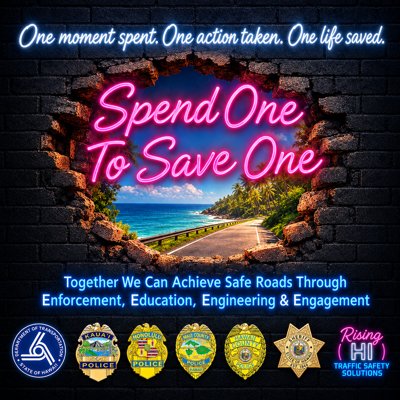
 Spend One to Save One
Traffic safety is delivered by many hands
Every group below has a role and its own one-page fact sheet: the campaign in brief, your commitment, and six ways you can help. Download the full set or open an individual sheet.
The center of the program
High-visibility enforcement is one of NHTSA's highest-rated countermeasures, and only law enforcement can provide it. Each level of every agency has a defined role.
Law Enforcement Officers
One Hour. One Driver. One Life. Work the data, target what kills, make every stop count, build solid cases, be eyes on the road, and engage safely.
Law Enforcement Supervisors
Protect the hour and point it where the data says. Schedule it, brief with data, measure outcomes rather than quotas, and report up monthly.
Law Enforcement Leadership
Make traffic safety a core mission. Introduce it yourself, publish real goals, resource it, keep the expertise, and own the crash picture.
One action a month, in your own field
First Responders
Safe crash scenes, Move Over, credible prevention voices, and car seat checks at fire stations.
Courts
Timely, consistent consequences that follow detection, including camera citations.
Transportation Officials
Fix high-crash locations and close the loop on officer and community hazard reports.
Elected Officials
Place laws, funding, and traffic safety on every agenda, and connect constituent concerns to action.
Community Partners
Survivor voices, advocacy, and outreach through your networks. Keep the human cost in view.
Communication Specialists
Publicize every operation, pair warnings with actions, and host Talking Traffic Tuesdays.
Educators
Safety lessons from keiki to kūpuna, defensive driving for new drivers, and officers in driver ed.
Hospitality
Reach visitors on arrival, rent it safe, serve responsibly, and promote sober rides and helmets.
Medical Specialists
Injury data, patient counseling, and child passenger safety priorities.
It Will Take All of Us
Officers, engineers, and partners can do a lot, but only you decide how you travel. One minute of planning before every trip, driving defensively, and one conversation with family, friends, and co-workers about safer driving can make sure you and your loved ones arrive alive every time.
Drivers
Plan your route and leave early. Phone on Do Not Disturb. Slow down near schools and crosswalks. Drive defensively and expect others to make mistakes. Never drive impaired.
Riders
Helmet every time. Be seen with bright gear, lights, and reflectors. Know the rules for your device, ride sober, and never lane split.
Passengers
Buckle up in every seat, including the back. Use the right car seat for each child and get it checked at a fire station. Speak up if your driver is speeding, distracted, or impaired.
Pedestrians
Phone down and eyes up when you cross. Use crosswalks, obey traffic laws, and make eye contact with drivers. Wear light or reflective clothing after dark.
Ready to take part?
A majority of Hawaiʻi law enforcement agencies have already committed. Don't wait: start today within your group or organization using the suggested actions in your fact sheet, and reach out to your local police department or the Hawaiʻi Law Enforcement Liaison.
Contact: slate@risinghi.com