Law Enforcement
Patrol and traffic officers, and Department of Law Enforcement sheriffs
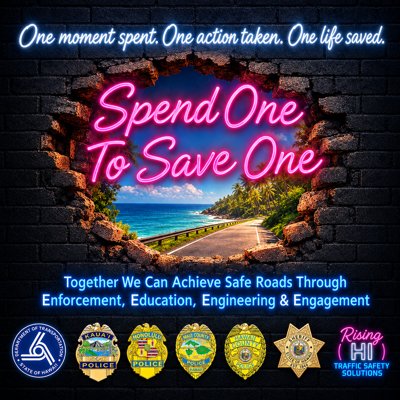
One moment spent. One action taken. One life saved.
Spend One to Save One is Hawaiʻi's statewide, multi-agency traffic safety initiative, coordinated by the Hawaiʻi Department of Transportation and the Hawaiʻi Law Enforcement Liaison, launching statewide on January 1, 2027. The idea is simple: if officers spend one focused hour on traffic safety, and every partner and community member invests a moment of their own time for the same cause, lives will be saved.
One Hour. One Driver. One Life.
Dedicate time to proactive traffic enforcement or education, with the goal of changing at least one driver's behavior. High-visibility enforcement works, not only for traffic safety but for crime reduction as well.
Patrol the high-crash corridors, intersections, and school zones on your hotspot map, not convenience "fishing holes."
Focus on speed, impairment, distraction, seat belts and helmets, failure to yield, and aggressive driving.
Fair, respectful contacts, warnings, and a safety tip build voluntary compliance. Positive stops count too.
Investigate crashes thoroughly, file accurate reports on time, and keep SFST, ARIDE, and DRE skills current.
Report lighting outages, signage, sight-distance, pavement, and signal problems through the hazard reporting protocol.
Talk story at schools, events, and driver ed classes, teach defensive driving, and use TIM practices to protect yourself.
Your work is proven to save lives. NHTSA's Countermeasures That Work rates high-visibility enforcement, like publicized sobriety checkpoints and seat belt campaigns, among the most effective countermeasures. It also prevents crime.